
The Solutionists, with Mark Scott
Join Mark Scott, Vice-Chancellor and President of the University of Sydney, and get ready to view the world from a different perspective.
From our own wellbeing to the preservation of the planet, The Solutionists dives into the most pressing issues of our time and introduces you to the people unearthing the seeds of remarkable solutions.
You'll discover a world of progress and possibility.
Listen to the latest episode
Listen now on: Apple Podcasts | Spotify | Pocketcast
Episode 3: Political powerhouse Alastair Campbell on broken politics, the Iraq War, and why he’s grateful for his breakdown
Listen now on: Apple Podcasts | Spotify | Pocketcast
“If you’re going to have a breakdown, try not to have it in a top secret secure naval Dockyard.”
You might know Alastair Campbell as the formidable former press secretary of British prime minister Tony Blair and co-host of popular podcast The Rest is Politics.
But back in 1996, when Alastair was a high-flying tabloid journalist, his mind suddenly unravelled. “I was hearing voices and seeing things that weren’t there.”
Alastair thought his breakdown would spell the end of both his marriage and his career. But these days, he sees it as the best thing to ever happen to him. He offers candid insights into his struggles with addiction and depression.
Alastair also takes you inside 10 Downing Street at some critical moments in history, such as the death of Princess Diana, and the controversy over the Iraq War. “Deep down, I wish it never happened. But at the same time, I can still defend the decisions that Tony Blair made at the time.”
You’ll hear Alastair’s take on what’s gone wrong in politics and how to fix it. Plus, what could happen to democracy if Donald Trump is re-elected as US President.
Read: Transcript and episode notes
Published: 22 April 2024
Episode 2: Clones, cheats, and ChatGPT – How the AI revolution is reshaping education
Listen now on: Apple Podcasts | Spotify | Pocketcast
If you had a clone of yourself, what would you want it to do?
Professor Danny Liu pictures a classroom in the not-too-distant future where teachers work alongside AI ‘clones’ to help their students learn.
“It’s not about replacing them as teachers. It’s about empowering them and making them more effective.”
The role of artificial intelligence in education has been hotly debated, with concerns about cheating creating headlines. But what if we could harness regenerative AI to transform education for the better?
Danny Liu says AI can herald a new era of personalised learning, and he explains how he’s grappling with issues around student integrity and AI bias.
You’ll also go inside the classroom of Matthew Esterman at Our Lady of Mercy College Parramatta to find out how he’s rethinking assessments in the digital age.
“It’s going to be a massive challenge for students to prove that work is their own in a world where you can press a button and have an assignment done for you.”
Read: Transcript and episode notes
Published: 3 April 2024
Episode 1: Saving nature’s unsung heroes – Why pollinator decline threatens life as we know it and how you can help
Listen now on: Apple Podcasts | Spotify | Pocketcast
If you go into your backyard right now, you’ll be able to find a species of insect that is new to science. Tanya Latty guarantees it – even if you live in the inner city.
Tanya has loved creepy crawlies since she was little, and is now an entomologist at the University of Sydney. “You would be surprised how many things we don't know. There are all sorts of critters, most of which are probably unidentified.”
But around the world, insects are in trouble. “We’re almost certainly losing species faster than we’re naming them.”
The decline of pollinators such as bees, beetles, butterflies, and flies has enormous implications for people and the planet. One in every three mouthfuls of food you eat is thanks to a pollinator (and that includes chocolate!)
“I worry about that slow creep. How many can we lose before things just get crummy? We might be closer to that than we think,” Tanya warns.
Tanya sheds light on the challenges around insect conservation and explains how you can help pollinators.
You’ll also visit Whites Creek Community Garden with Professor Dieter Hochuli, and get to know some of his favourite pollinators. Dieter leads the Integrative Ecology group at The University of Sydney.
Read: Transcript and episode notes
Published: 20 March 2024
Episode 6: Not sleeping enough can kill you. Master the art of good sleep, with Dr Carmel Harrington
Listen now on: Apple Podcasts | Spotify | Pocketcast
After her son died of SIDS, Dr Carmel Harrington left her job as a lawyer to devote her career to finding answers.
Her groundbreaking research into SIDS opened up another mission: to wake society up to the critical importance of sleep.
Carmel is the managing director of Sleep for Health. High-flying CEOs and even the Australian military are now turning to her expertise in a bid to master the art of sleep.
Read: Transcript and episode notes
Published: 20 December 2023
Episode 5: The first 1,000 days – baby doctor Adrienne Gordon on giving your child the best start in life
Listen now on: Apple Podcasts | Spotify | Pocketcast
University of Sydney Clinical Professor and Neonatologist Adrienne Gordon helps save the lives of tiny babies in intensive care. They constantly amaze her. Their unique personalities. How fast they learn. The way they can be so close to death and yet go on to thrive.
Adrienne shares what parents need to know about the first 1,000 days, the critical period from conception to the age of two.
Read: Transcript and episode notes
Published: 6 December 2023
Episode 4: The longevity revolution – how to invest in your future and plan a meaningful 100-year life
Listen now on: Apple Podcasts | Spotify | Pocketcast
We’re all living longer, and in many countries, a baby born today could easily live to 100.
Professor Andrew Scott is a world-leading expert on longevity, a Professor of Economics at London Business School and the author of The 100-Year Life.
But longevity isn't about 'being old for longer’. Andrew says it gives us the chance to completely rethink the stages of our lives. You will have more time – as much as 100,000 extra hours – and you need to act now to set yourself up for the best possible future.
You’ll also hear from a group of movers and shakers at a Dance Health Alliance class in Sydney about the upsides of being older.
Read: Transcript and episode notes
Published: 22 November 2023
Episode 3: This is the room where it happens – How leaders unlock the power of collaboration, from the Thai cave rescue to leading a minority government
Listen now on: Apple Podcasts | Spotify | Pocketcast
Dr Kate Harrison Brennan is the director of the Sydney Policy Lab and a University of Sydney alumna. Her work brings people together to collaborate on solutions to the most pressing challenges of our time. In this episode, she shares practical ways to bring people together – be it at work, at home, or in the public policy sphere.
And Dr Richard Harris reflects on what the Thai cave rescue taught him about teamwork and trust.
Read: Transcript and episode notes
Published: 8 November 2023
Episode 2: Superstar teacher Eddie Woo on unlocking a love of learning (at any age)
Listen now on: Apple Podcasts | Spotify | Pocketcast
Eddie Woo, alumni of the University of Sydney and the teacher you wish you had, is here with a lesson on embracing learning at any age. He also gets personal, reflecting on his own life, how the death of his mother shaped his view of growth mindset, and how he came to realise teaching isn’t about knowing all the answers.
Read: Transcript and episode notes
Published: 25 October 2023
Episode 1: How to cool your body and survive in extreme heat
Listen now on: Apple Podcasts | Spotify | Pocketcast
Heatwaves kill more people than all natural disasters combined – but because they’re not visually dramatic, we underestimate how dangerous they are. Professor Ollie Jay, whose groundbreaking research has informed the likes of Google and the Australian Open, has another way of showing us how dangerous heatwaves can be.
Read: Transcript and episode notes
Published: 11 October 2023
Meet Mark
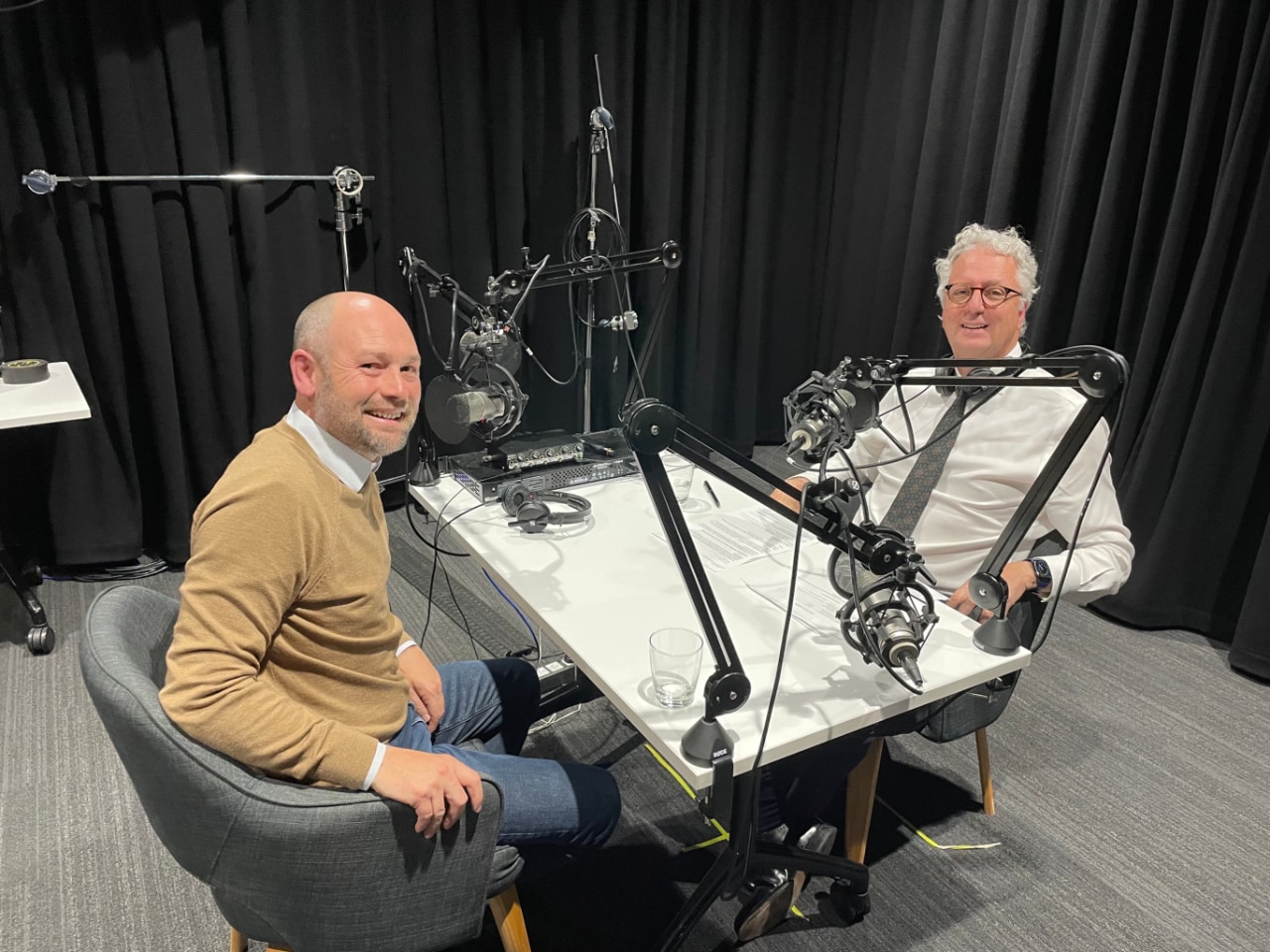
Professor Mark Scott and Professor Ollie Jay
Professor Mark Scott AO is the Vice-Chancellor and President of the University of Sydney and a University of Sydney alumni. He is a highly respected and successful senior leader of large and complex institutions, across public service, education and the media.
Sydney Ideas podcast
Public event series produced by University Marketing and Communications
Sydney Ideas is the University of Sydney's flagship public talks program, bringing you talks and conversations featuring the best and brightest minds at the University of Sydney and beyond.

Raising the Bar Sydney podcast
Public event series produced by University of Sydney Marketing and Communications
In April 2023 the University of Sydney and the City of Sydney teamed up to inject knowledge into people's night out for Raising the Bar Sydney. The event featured a wide range of topics from robotics and climate tech to cyber security and next-gen bio tech, catering to everyone's interests.
City Road Podcast
Original series produced by Associate Professor Dallas Rogers
City Road Podcast is informed stories about cities and urban life. From the researchers in the Urban Housing Lab and Smart Urbanism Lab at The University of Sydney.
Minding Your Mind
Original series hosted by Professor Ian Hickie (Brain and Mind Centre) and James O'Loghlin
In Minding Your Mind, mental health expert Prof Ian Hickie and author & broadcaster James O’Loghlin explore all aspects of mental health; the different types of mental health issues we can experience, their causes, how they affect us, and what we can do to get help and find solutions
Object Matters
Original series produced and hosted by Dr Craig Barker (Chau Chak Wing Museum)
Object Matters is the Chau Chak Wing Museum's regular podcast series hosted by Dr Craig Barker. Join Dr Craig Barker as he and a guest discuss one item in detail from the Museum's collections of art, archaeology, natural history, science and culture.
Open for discussion
Original series produced by University of Sydney Media Office, hosted by Dr Chris Neff
Join lecturer in public policy and University of Sydney alumni Dr Chris Neff as they turn their sceptical eye and curious mind to the world of research. Each episode an academic will join Chris in their office to explore the latest research on topics that affect all of us. From housing prices to diet guidelines and everything in between, Chris will question what the evidence says, debunking myths and assumptions along the way.
Reimagined Futures
Original series produced by Sydney Environment Institute
Be inspired by stories of community resilience and transformation in the face of the climate crisis. Reimagined Futures is a seven-part podcast series produced by the Sydney Environment Institute (based at the University of Sydney), the Social Entrepreneurship Association (Auroville), and the India and Bharat Together Foundation (New Delhi).
The Road To Find Out
Original series hosted by University of Sydney students Carla Field and Harry Peters
The Road To Find Out is a student-run podcast where academics from the University of Sydney chat about their remarkable personal journeys and ground-breaking research. Hosts Carla Field and Harry Peters sit down to talk about everything and anything - whether that be Greek philosophy, street libraries or educational disadvantage.

Shirtloads of Science
Original series hosted by Dr Karl
Dr Karl’s a curious optimist – a great combination for a science lover. An alumni of the University of Sydney, join him and his guests on Shirtloads of Science for weird facts, amazing conversation and remember, it’s never too late for a happy childhood.
Sydney Business Insights
Original series produced and hosted by Dr Sandra Peter and Professor Kai Riemer at University of Sydney Business School
Sydney Business Insights (SBI) aims to further informed research and critical thinking on major issues and trends as it impacts on the future of business. SBI talks with leading and innovative thinkers in research, industry, government and community.
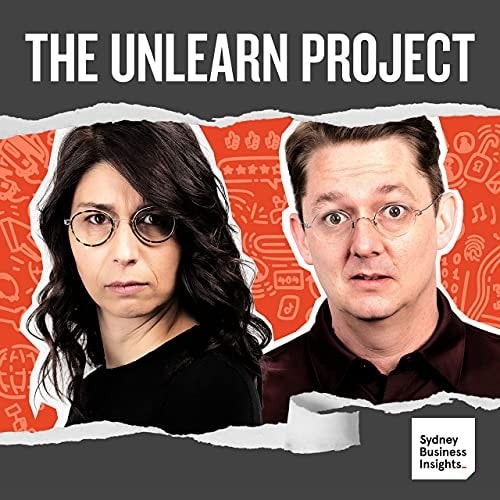
The Unlearn Project
Original series produced and hosted by Dr Sandra Peter and Professor Kai Riemer at University of Sydney Business School
The Unlearn Project is about changing common sense. The way the world works has changed. Things you thought you knew like automation will make our work easier, music is something to listen to, large companies can’t innovate, or data is the new oil are no longer true. Hosts Sandra Peter and Kai Riemer set out to unlearn old wisdoms and discover new ones.