Kat Leaver
Neuroprotection and Parkinson's Disease
Currently the most effective treatments available to treat PD only alleviate the symptoms. There is a need to develop neuroprotective drugs which slow or stop the progression of the disease. Early intervention may help slow the onset of debilitating symptoms. I'm doing a cotutelle PhD, and so will be completing a year of research in Tours, France. I have the opportunity to travel to present at conferences.
Susie Wood
Combustion of mine ventilation air methane using porous burners
I'm working on a project to develop greenhouse gas mitigation technologies for underground coal mines and landfills. At the moment, mine ventilation air containing methane is just released into the air. We're developing an advanced combustion system capable of burning diluted fuels like methane, so that we can make use of a fuel that would otherwise be wasted.
Yonghong Ge
Defense mechanisms of melon against Colletotrichum lagenarium and induces resistance with acibenzolar-S-methyl
My project aims to survey the infection process of C. lagenarium on melon seedlings, investigate the mechanisms of the interaction between melon and C. lagenarium and the efficacy of ASM on control of C. lagenarium. At the moment, research has shown the Colletotrichum fungus can penetrate leaves directly and does not require natural openings (e.g. stomates) or wounds. Previously, findings have demonstrated that in some phytopathogenic fungi, asexual spores called conidia germinate and develop a specific infection structure called an appressorium that enables fungal penetration of the host plant.
Josh Stern
Recruitment of human telomerase to telomeres
My PhD at Children’s Medical Research Institute aims to understand how cancer cells achieve immortality. The chromosome ends, or telomeres, of normal cells shorten with age. This eventually causes cells to stop dividing. In cancer cells this does not happen. Most of the time this is because the telomerase enzyme repeatedly extends the telomeres. My goal is to work out what key factors recruit telomerase to the telomeres allowing it to extend the chromosomes.
Jingwen Cai
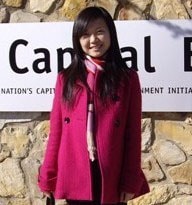
A Study of the Chemistry of Soybean Protein Curds
My project aims to ascertain role of proteins, lipids and saccharides in soybean on chemical and physical properties of tofu, explore novel approaches to improve the yield of soy milk, as well as examine the effect of ageing and storage on the chemistry of soy protein, ascertain the roles of aged constituents on the chemical and physical characteristics of soy protein curds.
At the moment, research has shown that soybean stored in high relative humidity and temperature will lead to the decreased yield, poor texture and dark color of soymilk and tofu.

Irshad Bibi
Acid buffering capacity of clay minerals in acid sulfate soils.
My PhD research is aimed to determine the dissolution rates of monomineralic clay samples and minerals isolated from inland acid sulfate soil samples and their acid buffering capacity in acidic soil solutions.
Study of mineral dissolution rates is important to understand and control environmental effect of acid mine drainage, soil acidification and other geological processes. Work has been done on clay mineral weathering; however, there is still a need to do a comparative acid dissolution study on pure clay mineral samples and on clay fraction separated from soil samples.
Natalie D'Abrew
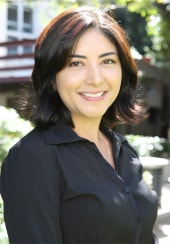
Impact of breast and gynaecological cancer in terms of the male partner's experience
I'm looking at the experience of male partners whose female partner is diagnosed with breast or gynaecological cancer. My research focuses on the impact of this disease in relation to body image and sexuality from the male partner's perspective. The aim is to improve knowledge of how male partners cope and to explore possible interventions for the male partner during this time.
Ichsani Wheeler
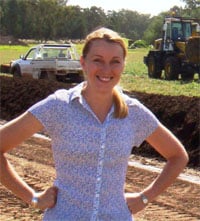
The auditability of soil carbon at the farm scale
My research topic aims to devise an efficient method for analysing soil carbon and provide a scheme for measuring and monitoring of soil carbon storage at the farm scale.
A refined auditing system can be developed by using a design-based approach on existing data combined with annual soil sampling of different soil types and production systems.
This will enable the participation of agriculture in the carbon economy as a supplier of carbon credits and contribute to the function of cap-and-trade systems, and also provide support for improved land management by adding value to ecosystem services.
Samuel Player
Reconstructing the Angkorian Channel Network
I am working on an ancient water management system at Angkor, Cambodia.
In the 1950's it was proposed that mismanagement of the water resource supplied by irrigation channels resulting in reduction in the required rice production. My research is essentially trying to demonstrate whether this hypothesis holds any water.
Using the sediment distribution and cross-sectional dimensions of the channels in hydrological models I am solving an archeological problem, plus providing a benchmark to compare contemporary concepts of 'sustainability'.
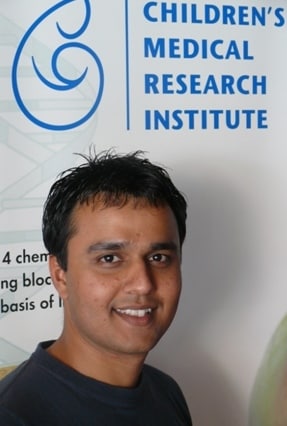
Sanket Joshi
Dynamin II as a potential anti-cancer drug target
My PhD project is to determine if the cellular protein dynamin II (dynII) is a potential anti-cancer drug target. DynII is implicated in the last step of the cell division process, called cytokinesis. Cell division is tightly regulated so that cells only divide when necessary and any damaged cells are killed. Cancer develops when this control is lost. We hope to stop the proliferation of cancer cells by targeting dynamin. This may result in stabilization or regression of a tumour. My research is conducted at the Children’s Medical Research Institute, part of the Westmead Research Hub.
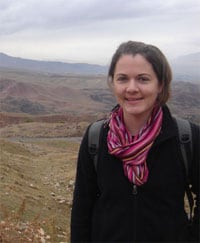
Adrienne Ryan
The ecological impact of dust emitted from Cowal Gold Mine (CGM).
I aim to determine the likely provenance of an aeolian component in the topsoil surrounding Cowal Gold Mine (CGM); and to assess the current and future ecological impact of these aeolian materials. Findings from this work may potentially benefit the ecosystem surrounding CGM, and those ecosystems adjoining mines elsewhere in regional Australia. Ideally this work will contribute towards the generation of appropriate EIL’s for soil in rural and ecologically sensitive areas.
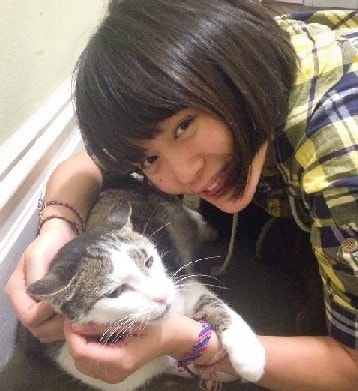
Kendy Tzu-Yun Teng
Occurrence and risk factor study on inherited disease and obesity in companion animals
Inherited disease and obesity are being considered major welfare issues in companion dogs. Using epidemiological approaches, I am studying occurrence and risk factors for these conditions. This research is being done under the VetCompass project, a nationwide system for disease surveillance that strives to collate and analyse electronic animal health records from primary-care veterinary clinics in Australia. The findings of my research will benefit key stakeholders from dog owners, veterinarians, to kennel clubs and the government and will enable development of evidence-based policy for controlling inherited diseases and obesity.
.JPG?1245805217)
Vidya Perera
Ethnic differences in CYP1A2 activity
My project aims to look at ethnic differences in CYP1A2 enzyme activity between people of Indian and European origin. CYP1A2 is responsible for the metabolism of numerous antipsychotic and antidepressant medications whilst also being involved in the metabolic conversion of carcinogenic compounds. The project will look at all aspects of ethnicty including genetics, environment and culture in order to pinpoint the factors responsible for drug response variability.
Primary Supervisor: Professor Andrew McLachlan
Associate Supervisor: Associate Professor Annette Gross
Degree: Doctor of Philosophy
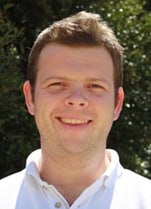
Tristan Sharp
Doctor of Philosophy - biomechanical and physiological demands of front row forwards during the scrum
"My PhD is centred on rugby union scrummaging. More specifically the research is examining the biomechanical and physiological demands of front row forwards during the scrum. The reason behind only focusing on the front row guys is because they are the only ones during the scrum that are interlocked and can be influenced by the opposition. In addition, it is these guys who transmit the forces created by both their own team and the opposition. If these players understand their technique more and how it influences others, then it’s intended that the game will be a lot faster and more appealing to the rugby audience."
Joseph Henry
Where is the water going? Scaling forest water budgets to explain spatial and temporal variation in evapotranspiration.
My project aims to develop techniques and models to scale water balances up and down from tree to catchment (spatial) and sub-daily to yearly (temporal) scales. This will be used to understand where water is being lost from the catchment area of Corin Reservoir, ACT (‘study area’). There is a need to find out what is going on in terms of evapotranspiration in montane and woodland forest with species and vegetation formations other than those mentioned, such as E. dalrympleana forest and E. pauciflora woodland, to improve our understanding of how water is lost from the study area, to enhance the management of drinking water.